Comparison

Drum Scanner vs Virtual Drum Scanner

A true drum scanner and a virtual drum scanner both belong to the top tier of professional film digitisation, but they do not solve the same problem in the same way. The right choice depends on the original, the required output, the acceptable handling path and whether the project justifies the additional complexity of wet mounting.

A practical guide to choosing between ICG® 380 drum scanning and Hasselblad Flextight X5/X1 virtual drum scanning for critical film work, archive capture and demanding print production.
  • 11 min read
  • Updated 2026
  • Scan Hub Lab
In this article


  • A true drum scanner can deliver the highest level of image extraction, especially with wet mounting.
  • Virtual drum scanning often offers a better balance of quality, handling control and workflow efficiency.
  • Wet mounting can reduce the visibility of dust and surface scratches and can improve tonal extraction in difficult film.
  • It also increases labour, materials, handling complexity and total project cost.
  • The best scanner is chosen by film condition, output goal and risk tolerance, not by prestige alone.
  • At Scan Hub, clients can compare ICG 380, Flextight X5 and Flextight X1 within one calibrated lab.

single_article_page_hero_section_image_alt
Scanner choice
The right scanner depends on the film, the goal and the handling path


Clients often begin with a simple question: which scanner is better, a drum scanner or a virtual drum scanner?
For serious film work, that question is too broad to be useful.


A true drum scanner such as the ICG® 380 and a virtual drum scanner such as the Hasselblad Flextight X5 or X1 are both professional high-end systems. Both can produce excellent files. But they differ in mounting method, workflow complexity, physical handling requirements, achievable extraction and project economics.


In practice, scanner choice should follow:


  • the film format,
  • its physical condition,
  • its density and tonal difficulty,
  • the final size and purpose of the output,
  • the acceptable level of intervention,
  • and the budget appropriate to the importance of the original.


This is why we do not present scanner choice as a prestige ladder. We treat it as a technical and practical decision.
Definitions
What the difference actually is

 
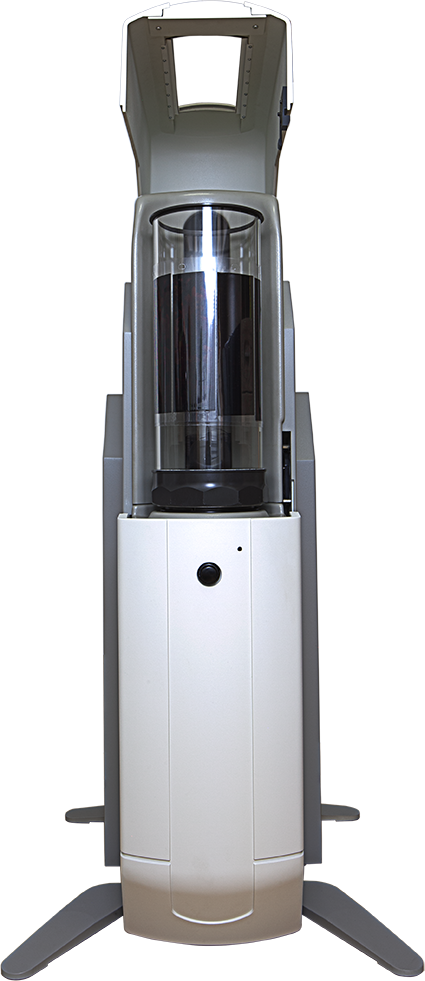
A true drum scanner is a rotating-drum system. The film is mounted to a drum and scanned through a highly specialised optical path designed for maximum precision. In the most demanding workflows, this may include wet mounting, sometimes also referred to as oil mounting.
 
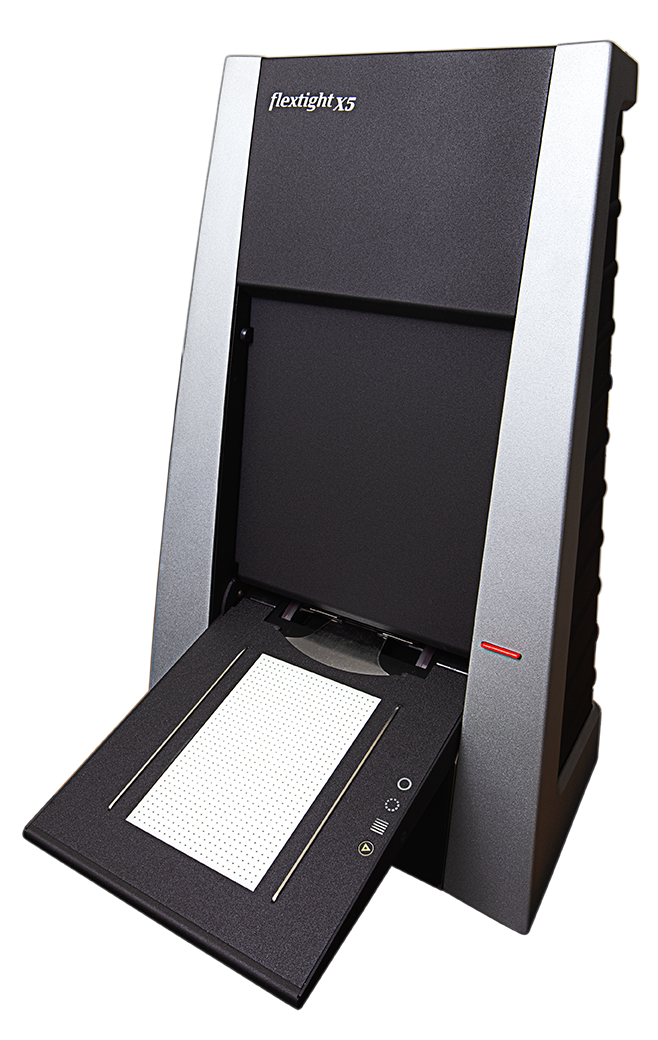
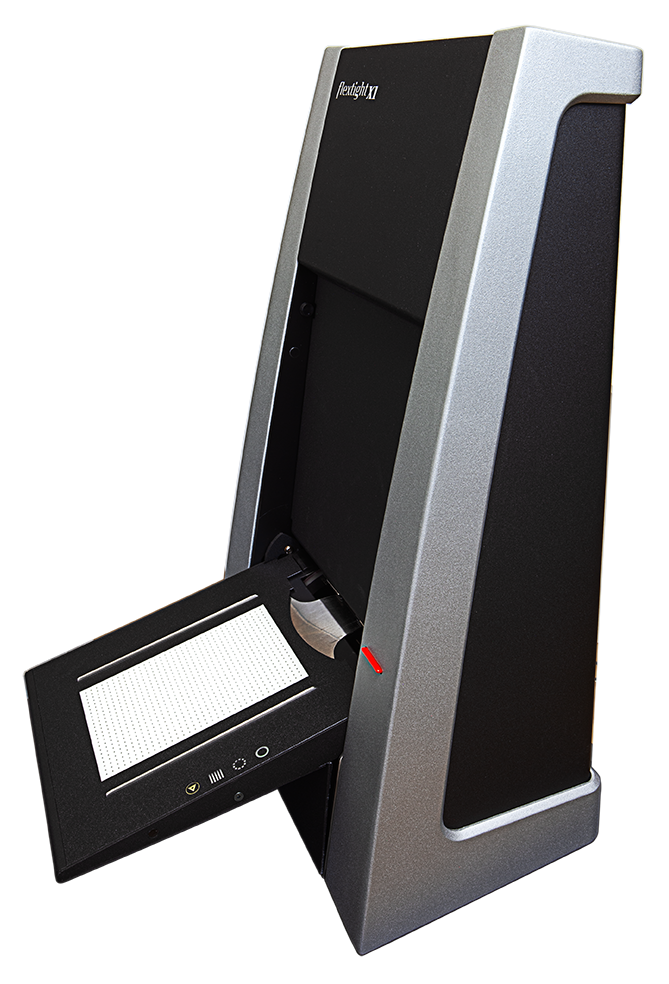
A virtual drum scanner uses a different approach. In the Hasselblad Flextight system, the film is mounted in a precision holder and tensioned along a controlled curved path during capture. This avoids glass sandwich mounting while still maintaining stable positioning and high sharpness. For that reason, Flextight scanners are often called virtual drum scanners.
 
Both systems are high-end, but their strengths are different. A true drum scanner is typically chosen for maximum extraction. A virtual drum scanner is often chosen for premium quality delivered through a more efficient and less intensive workflow.
 

Core difference
This is not a choice between good and bad, but between maximum and proportionate maximum
 
A drum scanner is often the right choice when the project is judged by the upper limit of what can be extracted from film. That usually means difficult originals, large final output, critical reproduction or master-grade files where every possible advantage matters.


A virtual drum scanner is often the right choice when the goal is extremely high quality without automatically committing to the most complex and expensive workflow.


That distinction matters.
 
Many originals do benefit visibly from a true drum scan, especially when wet mounted. Many others do not benefit enough to justify the additional time, materials, handling path and cost. In those cases, a Flextight workflow may be the more intelligent recommendation.
 
The best choice is not the most prestigious scanner. It is the scanner that makes technical and economic sense for the specific original.
 
True drum scanning
Where the ICG® 380 shows its strongest advantage

 
A high-end drum scanner such as the ICG® 380 is most compelling when the project calls for maximum extraction from film.
 
This is especially relevant for:


Its strongest advantage is not only high resolution in a narrow numerical sense. It is the overall character of extraction: shadow separation, tonal depth, micro-detail retrieval, smooth transition through dense areas and a file that can remain convincing under demanding enlargement.
 

For truly critical film work, a true drum scanner still occupies a special position.
 

Wet mounting
Wet mounting is one of the most important reasons to choose a drum scanner
 

For many clients, the decisive reason to choose true drum scanning is wet mounting.
In this workflow, the original is mounted to the drum using a scanning fluid and a mylar overlay. This changes more than just the mechanics of mounting. It can materially affect the result.


The practical advantages of wet mounting often include:


  • reduced visibility of fine surface dust,
  • partial suppression of the appearance of many light scratches and abrasions,
  • better optical coupling between film and mounting surface,
  • more stable rendering of subtle detail,
  • improved extraction in dense shadow areas,
  • and a file that may appear cleaner, deeper and more continuous than the same original scanned dry.


This is one of the reasons drum scanning has remained relevant at the highest level. Wet mounting can produce results that are difficult or impossible to match by simpler workflows.


For the right original, the difference is not theoretical. It can be visible in real print and retouching work.


Important balance
Wet mounting also increases labour, materials, cost and handling responsibility
 

Wet mounting is not a free improvement. It is a specialised workflow with real consequences.


Compared with virtual drum scanning, it usually requires:


  • more preparation time,
  • more operator attention,
  • mounting the film to the drum,
  • use of scanning fluid,
  • use of mylar sheets,
  • special tape and other consumables,
  • drum cleaning after capture,
  • and, in some cases, optional cleaning of residual fluid from the original after scanning.


It also requires appropriate working conditions and discipline, including:


  • clean controlled handling,
  • proper ventilation,
  • air-cleaning strategy,
  • protective gloves,
  • and, depending on the workflow and materials used, suitable respiratory protection and other safety procedures.


All of this increases cost. Not only machine cost, but labour cost, consumables cost and environmental-control cost.


That is why drum scanning should be a justified decision. When it is justified, it can be unmatched. When it is not, it may simply be disproportionate.


Client awareness
Clients should understand both the gain and the price of wet mounting

Wet mounting can be a major advantage, but it should never be presented as if it came without trade-offs.

A client choosing a true drum scan should understand that the workflow may offer:

  • better suppression of minor surface defects,
  • stronger performance with difficult dense film,
  • higher confidence for extreme print or master-file applications,
  • and a level of extraction that can exceed other scan paths.

But the client should also understand that it may involve:

  • more time,
  • more specialised handling,
  • greater workflow complexity,
  • higher service cost,
  • possible optional post-scan cleaning,
  • and, in some cases, limits based on the physical condition of the original.

That makes scanner choice more informed and more trustworthy. In serious work, transparency is part of quality.

Virtual drum scanning
Where Flextight X5 and X1 are often the smarter choice

The Hasselblad Flextight X5 and X1 occupy a very important place in a professional scanning lab because they make high-end film scanning available through a workflow that is often more practical, more efficient and less invasive than true drum scanning.

They are often the better choice for:

  • premium scans for print and publication,
  • editorial and commercial production,
  • high-quality archive projects,
  • mixed batches of film,
  • well-preserved negatives and transparencies,
  • projects where excellent quality is required across many originals,
  • and clients who want serious high-end scanning without automatically stepping into a wet-mounted drum workflow.

This is not a compromise in the casual sense. Flextight scanning is a genuine professional standard. It simply serves a different point on the curve between maximum extraction and workflow proportion.

Image quality
Flextight quality is excellent, but drum scanning can still lead at the absolute limit


A Flextight X5 or X1 can produce highly detailed, clean and professional files suitable for demanding output. For many clients and many originals, the result is not merely sufficient. It is excellent.


However, when the comparison is narrowed to the most difficult or most critical cases, a true drum scanner can still retain the upper hand, especially when wet mounted.


That advantage is most likely to matter when:


  • the original is extremely important,
  • the film is dense or tonally difficult,
  • the client expects very large enlargement,
  • surface imperfections would otherwise become distracting,
  • or the scan is intended as a definitive master rather than a strong production file.


This is why the comparison should not be framed as “can Flextight produce high-end files?” It clearly can. The real question is whether the project justifies going beyond that.
Film condition
Condition can overrule theory


 Scanner choice should never ignore the physical state of the film.


Important factors include:


  • curl and flatness,
  • brittleness,
  • surface damage,
  • age-related uncertainty,
  • density,
  • format,
  • and whether the original can safely tolerate a more intensive mounting process.


In some cases, a fragile original may not be an ideal candidate for wet mounting even if drum scanning would be attractive from a purely image-quality perspective. In other cases, the same original may still be safely handled in a Flextight workflow.


That does not automatically make the Flextight “better”. It makes it more appropriate under those conditions.


For this reason, serious scanner recommendation must include risk assessment, not just image ambition.

Output goals
The final use of the file should guide the decision


A scan intended for archive reference, premium publication, exhibition print, restoration or scanner comparison does not carry the same priorities.


True drum scanning is often most justified when the file is intended for:


  • master archive capture,
  • very large fine art printing,
  • museum or collector-grade reproduction,
  • restoration source work,
  • critical transparency reproduction,
  • or technical comparison at the highest level.


Virtual drum scanning is often the better fit when the file is intended for:


  • professional print production,
  • portfolio work,
  • publishing,
  • structured archive digitisation,
  • premium delivery across multiple frames,
  • or projects where quality must remain very high while budget and workflow still need to remain proportionate.


When the final use is known in advance, the scanner choice becomes clearer.


Economics
The right workflow is also an economic decision


Price should not be treated as an awkward secondary topic. In real projects, it is part of the decision.


Drum scanning generally costs more not because of branding, but because the workflow itself is more demanding. Wet mounting in particular adds real labour, real materials and real technical overhead.


Those costs may include:

  • mounting fluid,
  • drum-cleaning materials,
  • residual-fluid cleaning materials,
  • mylar sheets,
  • special tape,
  • additional handling time,
  • additional inspection time,
  • and the environmental and safety requirements needed to run the workflow correctly.


Virtual drum scanning is often more economical while remaining firmly within the high-end category. That is why it is so often the most sensible path for strong originals that do not require the full weight of a wet-mounted drum workflow.


The important point is not whether one option is cheaper. The important point is whether the additional cost creates meaningful value for the job.


Objective comparison
Why comparing scanners inside one lab matters


One of Scan Hub’s strongest advantages is that clients can compare a true drum scanner and virtual drum scanners within one controlled laboratory environment.


This matters far more than it may seem.


A comparison between different labs is rarely a comparison between scanners alone. It usually also includes different operators, different calibration states, different displays, different colour decisions, different intake standards and different assumptions about what the file should look like.


That makes the result harder to interpret.


At Scan Hub, ICG® 380, Hasselblad Flextight X5 and Hasselblad Flextight X1 can be evaluated within one calibrated ecosystem. That means the client can compare scan paths with much greater confidence that the differences seen are actually related to the scanners and workflows themselves, not to unrelated variables.


For clients making important archive, print or reproduction decisions, this is a major practical advantage.
Practical review
When to choose drum scanning and when to choose Flextight scanning


A true drum scan is often the right recommendation when:


  • the original is exceptional,
  • the file may serve as a master,
  • the project involves dense transparencies or difficult shadows,
  • surface defects would benefit from wet mounting,
  • very large printing is expected,
  • or the client wants the highest attainable scan path and accepts the related cost and handling complexity.


A Flextight scan is often the right recommendation when:


  • the film is strong but does not justify full wet-mounted drum treatment,
  • the project includes many frames,
  • workflow efficiency matters,
  • excellent quality is required at a more proportionate cost,
  • the original may be better served by a less intensive handling route,
  • or the client wants a serious high-end result without defaulting automatically to maximum intervention.


Quick guide
Drum scanner or virtual drum scanner?


Situation
 
Main concern
 
Recommended approach


Exceptional film intended for the highest possible output
 
Maximum extraction and master-grade quality
 
ICG® 380 drum scan, often with wet mounting


Dense transparency with difficult shadows
 
Tonal depth, D-max performance and subtle separation
 
ICG® 380 drum scan, especially where wet mounting is justified


Original with light surface scratches or persistent fine dust
 
Cleaner optical result before retouching
 
ICG® 380 wet-mounted drum scan


Premium scan for publication, portfolio or exhibition print
 
High quality with controlled cost and workflow
 
Hasselblad Flextight X5


Selected professional film workflows where strong quality is needed with a focused format path
 
Dependable high-end capture with practical handling
 
Hasselblad Flextight X1


Fragile film where wet mounting may introduce unnecessary risk
 
Balancing quality against physical safety
 
Flextight path may be preferable, subject to condition review


Client wants to compare top scan paths objectively
 
Meaningful evaluation without cross-lab variables
 
Compare ICG® 380, X5 and X1 within one lab


Advantages
Strengths and limitations of each workflow


Each workflow is strong because of what it prioritises.

ICG® 380 drum scanning — main advantages:

  • maximum extraction potential,
  • wet mounting capability,
  • strong reduction in the visibility of fine dust and many superficial scratches,
  • excellent shadow separation,
  • superb tonal depth,
  • strong performance with difficult transparencies,
  • and outstanding suitability for master-grade files and extreme enlargement.

ICG® 380 drum scanning — considerations:

  • higher labour intensity,
  • more expensive consumables,
  • greater workflow complexity,
  • higher service cost,
  • possible need for optional post-scan cleaning of the original,
  • and the need to assess whether the film is suitable for wet mounting at all.

Hasselblad Flextight X5 and X1 — main advantages:

  • excellent professional image quality,
  • high sharpness and consistency,
  • premium results without full drum workflow complexity,
  • more efficient handling path,
  • strong suitability for many production, archive and print jobs,
  • and better economic proportion for many real-world projects.

Hasselblad Flextight X5 and X1 — considerations:

  • they do not replicate the full effect of wet mounting,
  • they may offer less advantage with difficult surface damage,
  • and in the most critical maximum-extraction cases they may not reach the same upper limit as a top wet-mounted drum scan.
Important note
There is no universally “correct” premium scanner


  • It is tempting to treat drum scanning as the automatic premium answer and virtual drum scanning as the practical alternative. Real scanning decisions are more nuanced than that.
  • A premium decision is not defined only by how extreme the workflow is. It is defined by whether the workflow is justified.
  • Sometimes the correct recommendation is a wet-mounted drum scan because the original and the output clearly warrant it.
  • Sometimes the correct recommendation is a Flextight scan because it offers the right balance of quality, risk control, workflow discipline and cost.
  • Sometimes the client may consciously accept a compromise. For example, if a fragile original may not be an ideal candidate for wet mounting but can still be handled safely on a virtual drum scanner, the choice becomes a matter of priorities.
  • Our role is not to force one answer. Our role is to explain the options, the risks and the likely consequences clearly enough for the choice to be well informed.
Before you order
Common questions about drum and virtual drum scanning


Question:
Is wet mounting always the best option on a drum scanner?
Answer:
No. Wet mounting can provide major advantages, but it also increases handling complexity, labour, material cost and workflow risk. It should be chosen when the expected gain is meaningful and the original is suitable for the process.


Question:
What does wet mounting improve in practice?
Answer:
It can reduce the visibility of fine dust and many light surface scratches, improve optical coupling, help deliver a cleaner-looking scan and support stronger extraction from difficult dense film, especially in shadow areas.


Question:
Why is drum scanning more expensive?
Answer:
Because the workflow is more demanding. It often involves mounting fluid, mylar, specialist tape, cleaning materials, more preparation time, more operator attention and stricter environmental and safety requirements.


Question:
Can a fragile original be safer on a Flextight than on a drum scanner?
Answer:
In some cases, yes. Film condition can make a less intensive workflow more appropriate, even when a drum scan might offer a higher theoretical limit in image extraction.


Question:
Does Flextight scanning still count as high-end?
Answer:
Absolutely. Flextight X5 and X1 are serious professional tools. The question is not whether they are high-end, but whether the project needs to go beyond them.


Question:
Can I compare ICG 380, X5 and X1 before deciding on a larger project?
Answer:
Yes. One of our key advantages is the ability to compare these scan paths within one calibrated lab, using one controlled workflow and one technical standard.
How we work
We recommend the scan path, not just the scanner


At Scan Hub, we treat scanner selection as part of the imaging strategy.

Before recommending ICG® 380, Flextight X5 or Flextight X1, we review:

  • film format,
  • film condition,
  • surface quality,
  • density and tonal difficulty,
  • flatness and handling suitability,
  • the intended use of the file,
  • the scale of the project,
  • and whether wet mounting is technically justified and economically sensible.

This allows us to build a workflow that is:

  • appropriate to the original,
  • clear in its risks and benefits,
  • aligned with the final output,
  • and more objective than a scanner choice based on reputation alone.

Not sure whether your project calls for ICG 380 drum scanning or Flextight scanning?


Tell us about the film, its condition and the final purpose of the file. We can recommend the most suitable workflow, explain whether wet mounting is justified and, if needed, arrange an objective comparison between ICG® 380, X5 and X1 in one calibrated lab.


  • Film format
  • Number of originals
  • Surface condition
  • Dust, scratches or abrasion
  • Curl, brittleness or fragility
  • Intended output and print size
  • Need for comparison between scan paths
  • Budget and workflow priorities