Scanner choice
The question is not which scanner is more prestigious, but which one is more justified
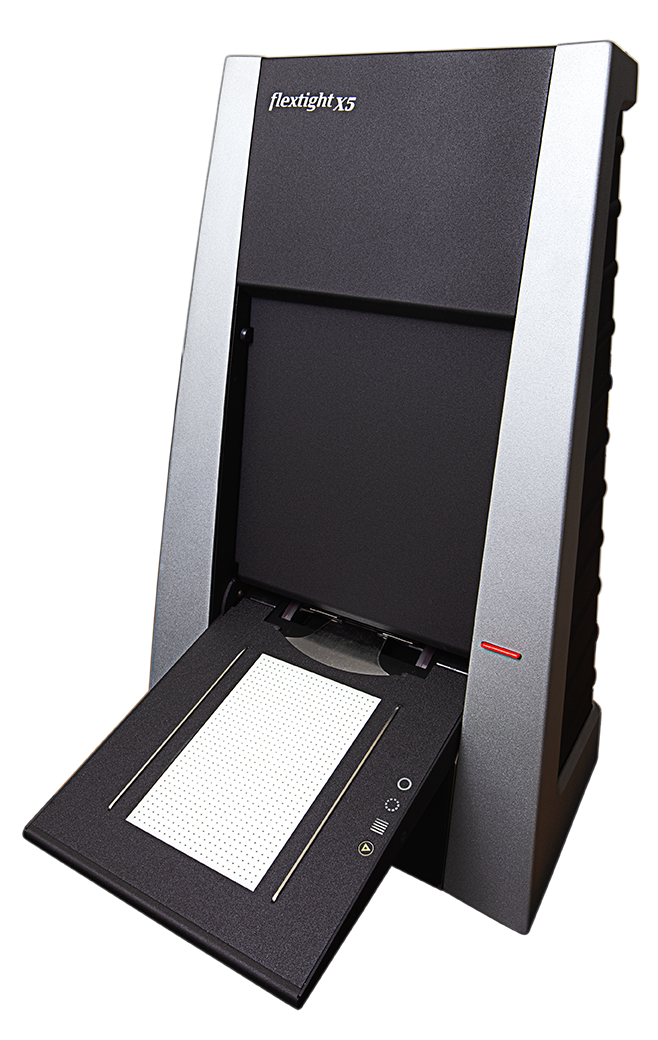
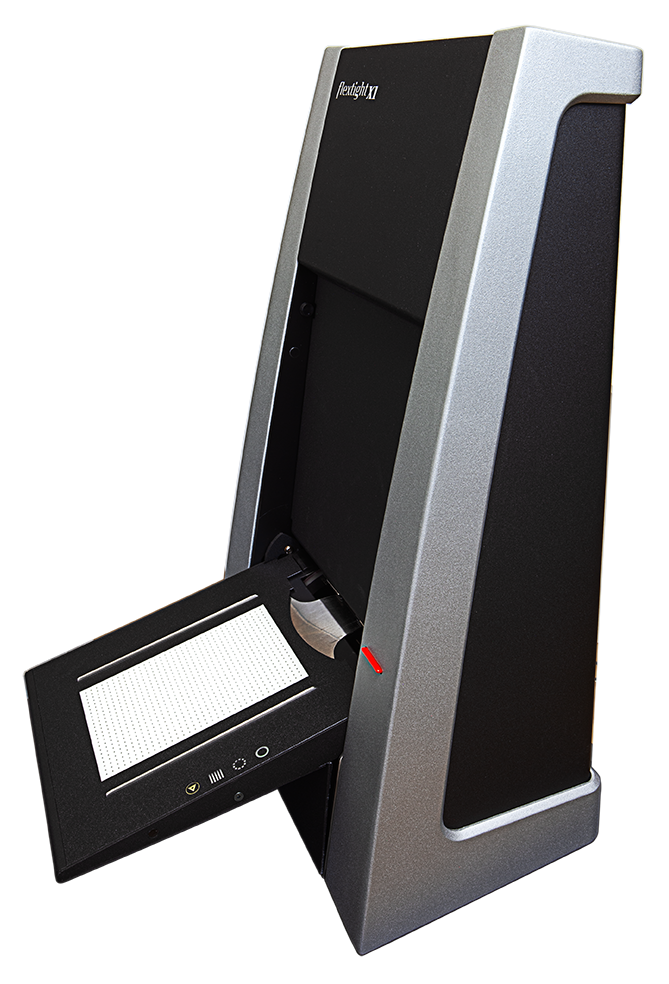
When clients see both the Hasselblad Flextight X5 and the Flextight X1 listed in one lab, a predictable assumption often follows: the X1 must be a lower-tier version of the X5 for clients who want to spend less.
That is not the right way to understand these scanners.
They do belong to the same Flextight family and they do share the same core virtual drum concept. But in a professional workflow, their meaning is not “premium versus budget”. Their meaning is broader capability versus more focused capability.
The practical question is not whether the X1 is respectable enough. It clearly is. The practical question is whether the project actually requires the additional flexibility and performance headroom of the X5.
For some jobs, the answer is yes. For others, the X1 is entirely justified on technical grounds.
Shared platform
What the X5 and X1 have in common
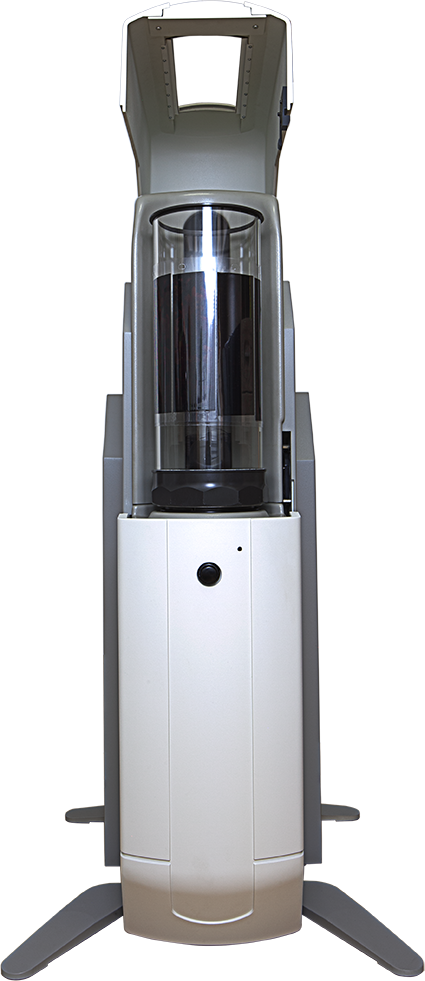
Both scanners are part of the Hasselblad Flextight line and both use the same virtual drum principle: the film is held in a precision holder and tensioned along a controlled curved path during capture. This allows the scanner to maintain excellent film positioning without relying on a conventional flatbed glass sandwich.
As a result, both the X5 and the X1 offer:
- professional film scanning quality,
- high sharpness and consistency,
- a respected virtual drum workflow,
- careful handling for suitable film originals,
- and output appropriate for serious print, archive and production work.
This is important because it immediately reframes the comparison. The X1 is not being compared with consumer-level scanning or with ordinary flatbed capture. It is being compared with another scanner from the same professional family.
Core difference
The real difference is scope, flexibility and project ambition
The Flextight X5 is the more capable and more flexible system overall. It is the stronger choice when the project demands broader format support, higher productivity and the greatest available performance within the Flextight range.
The Flextight X1 is more selective. Its role is not to imitate the X5 in every context, but to provide a more focused professional path for selected film workflows where the additional capability of the X5 may not be necessary.
That distinction matters because high-end scanning is not improved by using a bigger tool than the project actually needs.
If the film format, desired output and project structure sit comfortably within the strengths of the X1, then choosing the X1 is not a downgrade in principle. It is a proportionate decision.
Flextight X5
Where the X5 earns its place
The Hasselblad Flextight X5 is generally the preferred choice when the client needs the broadest and most capable virtual drum workflow available within the Flextight platform.
This is especially relevant for:
- projects involving multiple film formats,
- more demanding professional production,
- larger scanning batches,
- clients who need greater workflow flexibility,
- situations where the highest Flextight-level extraction is justified,
- and jobs where one scanner must cover a wider operational range.
The value of the X5 is not only that it is the “top model”. Its real value is that it extends what the lab can do while preserving the Flextight workflow clients trust.
For a lab, that means broader capability. For a client, it means fewer technical compromises when project requirements become more varied or more demanding.
Flextight X1
Where the X1 is fully justified on its own merits
The Flextight X1 should be understood as a focused professional scanner, not as a symbolic fallback.
It is well suited to selected film workflows where:
- the format is appropriate to the scanner’s intended range,
- the project does not require the broader capability of the X5,
- high-quality professional output is still expected,
- workflow discipline matters more than excess capability,
- and the job benefits from a serious but more narrowly targeted scan path.
This makes the X1 a very rational choice for many projects. If the original, the output and the handling path do not demand what is unique to the X5, then the X1 can be the correct recommendation.
That is not a matter of lowering standards. It is a matter of matching the tool to the task.
Image quality
The X5 may lead at the top end, but the X1 remains a true professional scanner
Clients naturally want to know whether the X5 produces better image quality than the X1.
The most accurate answer is this: the X5 is the more capable scanner overall and can be the stronger choice when a project reaches toward the upper limits of the Flextight system. But that does not mean the X1 becomes irrelevant or visually inadequate in every lesser case.
For many selected workflows, the X1 can still produce files that are fully professional, highly usable and entirely appropriate for demanding print and production work.
The meaningful difference appears when the project specifically benefits from what the X5 adds. If the project does not benefit from those additional capabilities in a practical way, the X1 may be the more proportionate choice without becoming a “cheap version” in any serious sense.
Format and workflow
Format range and operational flexibility often decide the answer
In real lab work, scanner choice is often determined less by abstract status and more by operational fit.
Important questions include:
- What film format is being scanned?
- Does the project involve one format or many?
- How varied is the batch?
- How demanding is the final output?
- How much workflow flexibility is needed?
- Does the project justify using the highest-capability Flextight path from the start?
This is where the X5 often proves its value. It is the stronger choice when one needs broader scope and fewer constraints.
The X1 becomes compelling when the project is well defined, the film fits its intended use and there is no technical reason to invoke a wider-capability path than necessary.
Project economics
The correct choice is also a question of proportion
Professional clients do care about price, but price matters most when it is tied to meaningful technical value.
If a project genuinely benefits from the additional capability, flexibility or throughput of the X5, then choosing the X5 is easy to justify.
If it does not, then forcing the client upward simply because the X5 carries more status would not be a serious recommendation.
This is the key point: the X1 is not “for poor clients”. It is for projects that do not need the extra capability of the X5.
That is a very different statement.
In a well-run lab, the client should not be upsold into a more complex scanner path unless the image, format or workflow truly benefits from it.
Use cases
Typical situations where each scanner makes sense
The Flextight X5 is often the better choice when:
- the project includes multiple film formats,
- the job requires the broadest Flextight flexibility,
- the client wants the highest-capability virtual drum path,
- the scanning batch is substantial,
- or the final output justifies the strongest available Flextight workflow.
The Flextight X1 is often the better choice when:
- the project falls cleanly within selected supported workflows,
- the film does not require the broader reach of the X5,
- the client wants serious professional quality with a more focused path,
- or the job is technically well defined and does not benefit from paying for capability that will not be used.
Quick guide
When to choose X5 and when to choose X1
Table:
Situation Main concern Recommended approach
Mixed professional batch with broader workflow demands Flexibility across formats and project types Hasselblad Flextight X5
Critical virtual drum project where the strongest Flextight path is justified Maximum capability within the Flextight line Hasselblad Flextight X5
Selected film workflow with clearly defined scope Professional quality without unnecessary escalation Hasselblad Flextight X1
Project where output needs are serious but operationally focused Strong quality with targeted workflow Hasselblad Flextight X1
Client assumes X1 is only a lower-status choice Need for correct technical framing Choose by fit, not by prestige
Need to compare both Flextight paths objectively Confidence before scaling a larger project Compare X5 and X1 within one lab
Advantages
Strengths and considerations of each scanner
Each scanner becomes strong when used in the right context.
Hasselblad Flextight X5 — main advantages:
- the broadest and most capable Flextight workflow,
- strong format flexibility,
- higher-end virtual drum performance,
- excellent suitability for varied professional work,
- greater usefulness across mixed projects,
- and the most complete Flextight path for demanding jobs.
Hasselblad Flextight X5 — considerations:
- more capability than some projects actually need,
- potentially higher service cost where its added scope is unnecessary,
- and less economic proportion for narrowly defined jobs that fit comfortably within X1 requirements.
Hasselblad Flextight X1 — main advantages:
- serious professional virtual drum quality,
- a focused and justified workflow for selected formats and projects,
- strong value when its scope matches the task,
- better proportion for jobs that do not require X5-level breadth,
- and a credible high-end path in its own right.
Hasselblad Flextight X1 — considerations:
- narrower workflow role,
- less flexibility than the X5,
- and not always the right answer when the project requires the broadest Flextight capability.
Scan Hub advantage
Why comparing X5 and X1 in one lab is more meaningful than comparing specs alone
One of the strongest advantages of Scan Hub is that clients do not need to rely on assumptions, internet folklore or spec-sheet interpretation alone.
Because both the Flextight X5 and Flextight X1 are available within one lab, we can assess their practical role under one controlled workflow.
That matters because meaningful comparison depends on more than scanner model names. It also depends on:
- consistent operator handling,
- consistent calibration,
- consistent viewing conditions,
- consistent file preparation,
- and one shared technical standard.
Without that, clients are often comparing not only scanners, but also different labs, different habits and different quality thresholds.
Within one calibrated environment, the comparison becomes much more useful and much more honest.
Important note
The X1 is not a lesser identity, but a narrower one
The easiest mistake in this comparison is to think in social rather than technical categories.
The X5 is not “for serious clients” while the X1 is “for everyone else”. That is not how professional equipment should be presented.
The X5 is broader, stronger and more flexible. The X1 is more focused. Those are not the same thing.
A client with a well-defined project that fits the strengths of the X1 is not making a second-class choice. On the contrary, that client may be making the most disciplined and technically appropriate choice available.
The right comparison is not status versus status. It is requirement versus capability.
Before you order
Common questions about Flextight X5 and Flextight X1
Question:
Is the Flextight X1 just a cheaper version of the X5?
Answer:
No. It belongs to the same professional virtual drum family, but it serves a more focused workflow role. It should be judged by project fit, not by the assumption that it is simply a downgraded X5.
Question:
When should I choose the X5?
Answer:
Usually when the project needs the broadest Flextight capability, greater flexibility across formats, or the strongest available virtual drum workflow for more demanding or varied jobs.
Question:
When is the X1 the right choice?
Answer:
When the film format, project scope and output requirements sit comfortably within its intended workflow and there is no technical reason to pay for capability that will not be used.
Question:
Will the X1 still produce professional results?
Answer:
Yes. The X1 is a serious professional scanner. The key issue is not whether it is professional, but whether the project requires what the X5 adds beyond it.
Question:
Can I compare X5 and X1 before deciding on a larger job?
Answer:
Yes. One of our strengths is the ability to compare both Flextight paths within one calibrated lab and one controlled workflow.
How we work
We recommend the right Flextight path, not the more impressive label
At Scan Hub, we do not present Flextight X5 and Flextight X1 as a simple luxury hierarchy.
We review:
- film format,
- project scale,
- output goals,
- handling needs,
- workflow complexity,
- and whether the project meaningfully benefits from the broader capability of the X5.
This allows us to recommend a path that is:
- technically justified,
- economically proportionate,
- appropriate to the original,
- and aligned with the final purpose of the file.