Photographic film, old prints, slides and Polaroids do not simply remain in storage unchanged. They age, shift, fade, gather contamination and gradually lose recoverable information. Professional scanning has therefore become more than a convenience. It is now one of the most practical ways to preserve personal history, protect irreplaceable originals and create digital files suitable for restoration, printing, publishing and long-term archival use.
A considered guide to why high-quality digitisation matters today, where it is used, and why the right lab makes a measurable difference.
10 min read
Updated 2026
Scan Hub Lab
In this article
Professional scanning preserves originals that continue to change with time, even in storage.
Family archives often contain unique photographs and film that cannot be replaced once damaged or lost.
The value of a scan depends not only on resolution, but on handling, workflow, calibration and judgment.
Digitisation is increasingly relevant for private clients, photographers, studios, publishers, museums and archives.
For important originals, the right lab helps improve both technical results and economic efficiency.
A multi-scanner, colour-managed workflow allows more objective decisions and reduces unnecessary risk.
Preservation
Digitisation is no longer optional for many important photographic archives
заголовок_1
заголовок_2
заголовок_3
заголовок_4
кол_1_стр_1
кол_2_стр_1
кол_3_стр_1
кол_4_стр_1
кол_1_стр_2
кол_2_стр_2
кол_3_стр_2
кол_4_стр_2
кол_1_стр_3
кол_2_стр_3
кол_3_стр_3
кол_4_стр_3
There was a time when scanning could be treated as a secondary step, something useful to do eventually. That is less true now.
Film fades. Colour shifts. Prints stain or yellow. Polaroids lose stability in ways that are often subtle at first and then suddenly irreversible. Sleeves deteriorate. Dust settles. Repeated handling leaves traces that accumulate over decades. Even when an image still appears visually intact, the original may already be losing fine distinctions in tone, colour and detail.
This is the central reason professional scanning matters: it captures what still remains before more is lost.
For family archives, private collections and professional holdings alike, digitisation is often the most practical form of preventive preservation. It does not replace the original, but it reduces dependence on repeated handling and creates a durable digital asset while the source material still contains the most information it is likely to offer.
Beyond convenience
A meaningful scan is more than a quick digital copy
It is easy to think of scanning as a simple conversion from physical object to image file. In practice, the difference between a casual copy and a professionally created master file can be substantial.
A low-grade scan may be enough for reference, messaging or on-screen browsing. But important originals deserve a different standard. A professional scan aims to preserve as much useful information as possible from the source, including:
fine detail,
stable tonality,
highlight and shadow separation,
accurate colour relationships,
clean geometry,
and file quality suitable for future use.
That future use may include restoration, large-format printing, editorial reproduction, exhibition production, archive access or intergenerational preservation. A stronger scan keeps more of those possibilities open. A weaker one closes them, often permanently.
Private archives
What appears ordinary in a family archive is often irreplaceable in reality
Home archives are frequently underestimated because they are familiar. Boxes of negatives, albums of small prints, sleeved slides, faded Polaroids and envelopes of old photographs may appear modest, but they often contain images of singular importance.
They may include the only surviving portraits of parents or grandparents, photographs of family homes that no longer exist, travel images from another era, private documentary records, childhood portraits, wedding pictures and everyday moments whose value becomes greater with time, not smaller.
Unlike published photographs, such material often has no duplicate and no institutional copy. If it fades, breaks, is mishandled or is scanned poorly, the opportunity is not easily recovered.
This is one reason professional digitisation is increasingly sought after. It gives private clients a way to preserve memory with a standard of care that reflects the real importance of the originals.
Ageing materials
Polaroids, old prints and film often need attention before deterioration becomes obvious
Different materials age differently, but few photographic objects remain perfectly stable over long periods.
Polaroids are especially vulnerable. Their unique visual character is part of their appeal, but so is their fragility. Colour can shift unevenly, contrast can flatten, surfaces can mark easily and the object itself can become less stable with time.
Older colour prints may drift toward magenta, yellow or cyan. Black-and-white prints may stain, silver or lose local separation. Negatives and transparencies may remain usable for decades while still losing subtle information that matters when scanned at a high level.
The practical consequence is simple: waiting until deterioration is visually dramatic is rarely the best strategy. In many cases, the most sensible time to scan is while the original remains stable enough to yield a strong, information-rich digital capture.
Restoration
Digital restoration is only as strong as the scan it begins with
Clients often think of restoration as a software problem. In reality, restoration begins at capture.
When a file is weak from the start — clipped, poorly balanced, lacking tonal separation, contaminated or insufficiently resolved — the restoration process becomes narrower, more speculative and often more expensive. When the source scan is carefully made, restoration has a stronger foundation.
A high-quality scan improves the restoration path by preserving:
more tonal data,
more reliable colour information,
better usable detail,
cleaner edges and transitions,
and a more stable base for retouching and reconstruction.
This has both aesthetic and economic consequences. Better source files typically make restoration more effective and more efficient. In that sense, professional scanning is not only a quality decision. It is often the most rational way to avoid compromised results and repeated work.
Contemporary demand
Demand continues to grow because digitised archives now serve many purposes
The renewed importance of scanning is not driven by sentiment alone. It also reflects how digitised photographic material is now used across personal, cultural and commercial contexts.
For private clients, professional scans may serve:
family archive preservation,
shared access across countries and generations,
anniversary or memorial projects,
family books and printed albums,
reprints and enlargements,
private restoration projects,
and secure long-term backup.
For professional clients, the same material may be used in:
editorial production,
book publishing,
brand heritage work,
exhibitions,
museum access systems,
artist estates and studio archives,
academic research,
licensing,
design production,
and fine art printing.
As the uses expand, expectations also rise. Clients increasingly need files that are not merely viewable, but dependable.
Professional applications
The relevance of scanning extends far beyond personal preservation
A professional scanning lab today serves a wide and diverse group of users.
These may include:
photographers working from legacy negatives and transparencies,
art and design studios using archive imagery in visual development,
creative agencies developing campaigns from historical material,
publishers preparing files for high-quality print reproduction,
prepress teams requiring dependable source material,
museums and archives preserving and providing access to collections,
galleries and artists documenting work or preparing reproductions,
foundations and estates managing photographic holdings,
researchers and institutions working with historical image sources,
and collectors preserving rare originals.
Although the contexts differ, the need is the same: the original must be handled intelligently, and the digital result must remain credible under real professional use.
Judgment
Important originals require more than equipment alone
High-end scanners matter. Optics matter. Dynamic range matters. But equipment alone does not create a serious scanning service.
What matters just as much is judgment: how the original is assessed, how it is handled, how the capture path is chosen, how colour is managed, and how the file is prepared in relation to its final purpose.
This becomes especially important when the material is:
fragile,
curled or difficult to mount,
faded or colour-shifted,
dense or technically demanding,
intended for restoration,
or important enough that rescanning later would be undesirable or impossible.
A serious lab is defined not by machines in isolation, but by its ability to decide which workflow is appropriate and why.
Why provider choice matters
The choice of lab affects safety, quality and overall value
When clients compare services, they often begin with nominal resolution or price. These are understandable reference points, but they do not reliably indicate the quality or value of the result.
For important originals, the more relevant questions are:
How safely will the material be handled?
How suitable is the chosen scanning path for this exact original?
How controlled is the colour workflow?
How consistent is the operator judgment?
How well will the resulting files support restoration, print or archival use?
And how much risk is introduced by the process itself?
A lower-cost service may seem economical at first and yet become expensive if it produces weak files, requires rescanning, introduces uncertainty or exposes irreplaceable material to unnecessary handling.
Professional scanning becomes truly valuable when it protects both the original and the usefulness of the final file.
Objective comparison
The most credible workflow decisions come from informed comparison, not assumption
One of the persistent problems in the scanning market is that clients are often asked to choose a process before they have any meaningful basis for comparison.
For valuable or technically demanding material, that is not ideal. Different scanners do not simply differ in theoretical quality. They differ in handling path, rendering character, tonal response, practical suitability and economic logic.
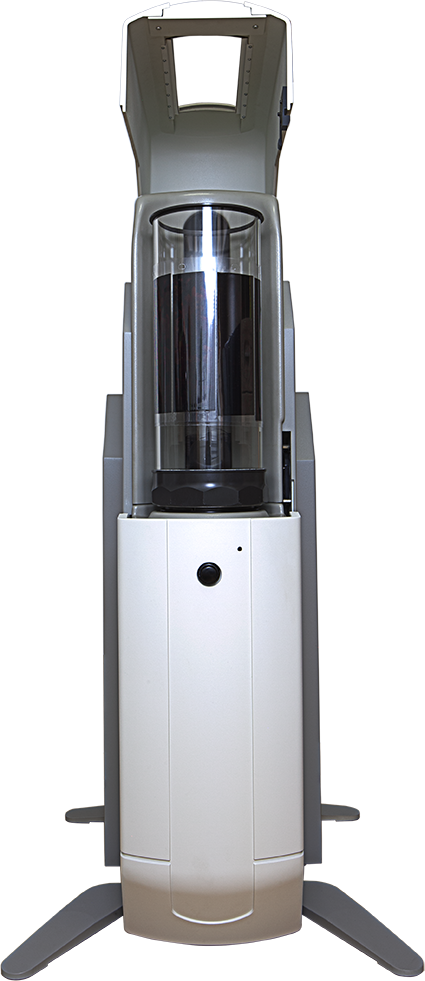
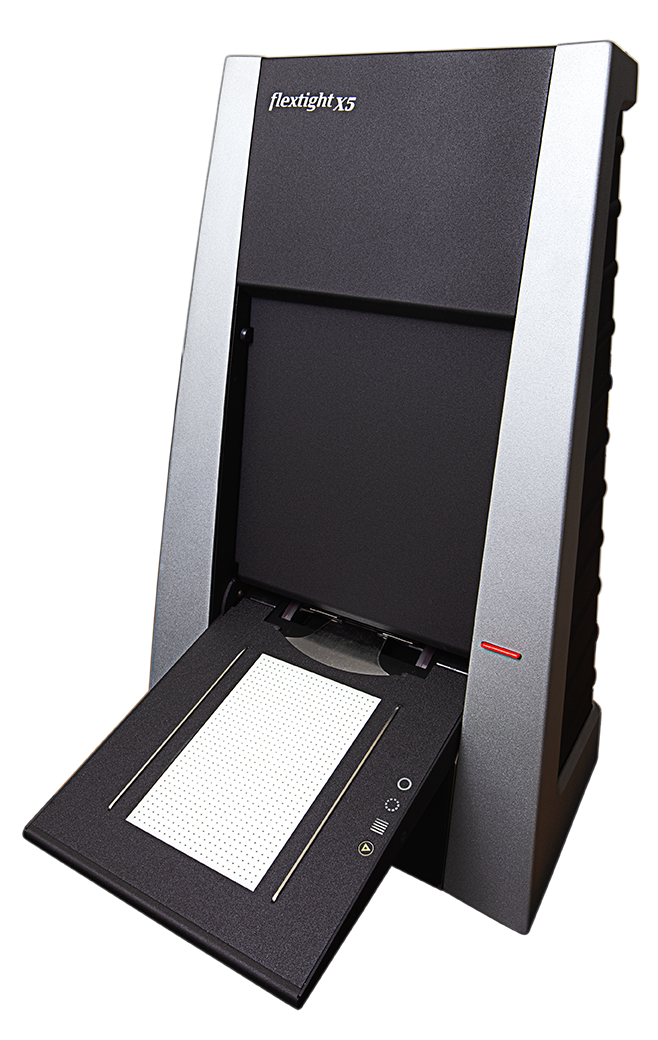
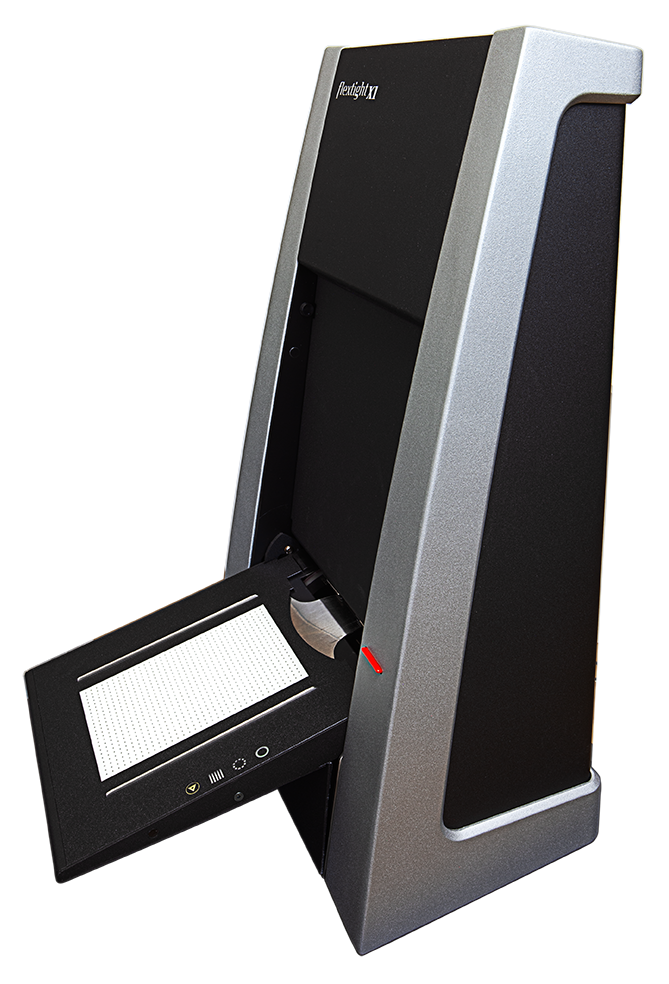
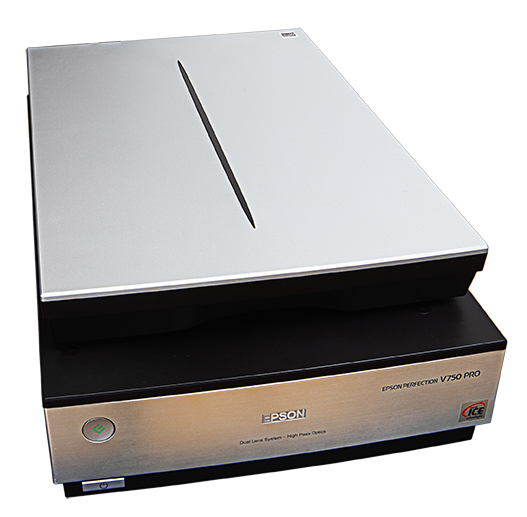
This is where a specialist lab with several serious scanning systems in one place offers a significant advantage. It allows the capture path to be selected more objectively, based on the material itself and the intended output, rather than on a single available machine or a generic sales preference.
For the client, this means less guesswork and a more evidence-based decision.
One location, less risk
Comparing scanning options in one lab is safer than sending originals to multiple providers
Rare or fragile originals should not need to travel from one service provider to another simply so a client can understand the differences between workflows.
When multiple high-end scanning paths are available within one lab, several practical benefits follow:
less transport-related risk,
less repeated handling,
clearer communication,
better continuity of assessment,
and a more efficient route to a well-founded result.
This matters especially for clients with valuable negatives, complex mixed archives, selected exhibition images or family materials whose sentimental importance far exceeds their commercial value.
Reducing unnecessary movement of the originals is not merely a logistical benefit. It is part of responsible preservation practice.
Colour integrity
A shared calibration standard makes comparison more meaningful
Comparison only becomes useful when it is technically fair.
If different scanners are judged through inconsistent display conditions, separate calibration logic or unrelated output assumptions, the comparison may say less about the scanners than about the environment around them.
A professionally calibrated workflow helps prevent that. When equipment, displays and output paths are aligned within one colour-managed system, differences between capture methods can be assessed more honestly and more clearly.
For the client, this leads to a simpler but important outcome: decisions are based less on accidental inconsistency and more on the actual behaviour of the image and the scanning process.
For photographers, designers, publishers and other colour-sensitive clients, this is especially significant. For private clients, it means a more dependable result even if the technical details remain in the background.
Continuity
Working with one team improves consistency and reduces friction
Another advantage of a serious lab is continuity of communication.
Important projects often involve more than one technical step. They may include format assessment, prioritisation, scanning-path decisions, proof review, restoration planning, output preparation and file organisation. When these steps are spread across different providers, the client often ends up repeating the same explanation many times, while context is lost between stages.
Working with one operator or one coordinated team avoids much of that fragmentation. Priorities remain clear. Preferences remain consistent. The project develops with memory and context rather than being reset at each new handoff.
For clients with emotionally significant family archives or professionally sensitive material, this continuity is not a luxury. It is part of the value of the service.
Location
A central European location can make international archive work more practical
For many clients, logistics matter almost as much as technical capability.
A lab based in Prague offers a practical geographic advantage: it sits in the centre of Europe, which simplifies access for clients across the region while remaining viable for international shipments from further afield.
This does not replace the importance of trust, quality or communication. But for projects involving valuable originals, easier logistics can reduce complexity and help make the entire process more manageable.
In a field where care, coordination and accountability matter, location can support the quality of the experience.
Economic logic
The most economical result is often the one that does not need to be repeated
For important originals, scanning should not be judged by price alone. It should be judged by the quality of the outcome relative to the value of the material and the intended use of the files.
A stronger workflow often saves money indirectly by avoiding:
unusable captures,
insufficient detail for print,
weak restoration starting points,
avoidable colour correction issues,
rescanning,
and unnecessary handling risk.
This is particularly true for selected images of high importance. In such cases, a well-chosen premium workflow may be far more efficient than a cheaper service that delivers a result too limited for the client’s real purpose.
True economy in scanning is rarely about the lowest entry cost. It is about obtaining the right result once, with clarity and confidence.
Trust
Some materials are commercially modest and still impossible to replace
A family photograph does not need market value to deserve expert care. A single Polaroid may be technically simple and still be the only surviving record of a person, place or moment. A small set of negatives may look ordinary and yet carry an entire private history.
This is why trust is central to professional scanning. Clients are not only handing over media. They are handing over objects that often carry memory, identity and emotional weight.
A good lab recognises that reality and reflects it not only in marketing language, but in handling standards, communication style and the ability to recommend an appropriate level of intervention.
Practical use
High-quality digital files remain useful long after the original project ends
One of the strongest arguments for professional digitisation is that its value does not end with the first delivery.
A well-made digital file can support many later uses, including:
family sharing and archive access,
reprints and enlargements,
books and albums,
memorial and anniversary projects,
genealogical and documentary work,
retouching and restoration,
editorial layouts,
museum or exhibition presentation,
research,
licensing,
and long-term digital preservation.
The more carefully the file is created at the beginning, the broader and more dependable those future uses become.
How we work
At Scan Hub, scanning is approached as a calibrated, decision-based process
At Scan Hub, digitisation is not treated as a generic one-path service. We begin with the original itself: its type, condition, handling requirements and final purpose. Only then is the appropriate scanning path selected.
Because multiple high-end systems are available in one place, comparison can be made more meaningfully and with less risk than if the material had to be sent to several separate providers. Because the workflow is colour-managed and consistently calibrated, results can be assessed within a common visual standard. And because projects are handled within one coordinated environment, communication remains more coherent from intake to final file delivery.
This approach is designed to be:
safer for valuable originals,
more objective in scanner choice,
more consistent in colour and file quality,
more efficient for clients with complex or important material,
and better aligned with real output goals.
For family archives, rare film, fading Polaroids, old photographs and professionally significant collections, that combination of technical range and workflow continuity can make a substantial difference.
Important note
The best scanning service is not the one with the strongest claims, but the one with the clearest reasoning
In serious preservation and reproduction work, confidence should come from method rather than exaggeration.
A credible scanning service explains why a workflow is appropriate, how the original will be handled, what level of capture is justified and what result the client can reasonably expect. It does not rely only on impressive language or isolated specifications.
For valuable photographic material, that clarity matters. It protects the client from vague promises, protects the original from unnecessary experimentation and helps ensure that the final files serve a real purpose well.
Quick guide
When professional scanning is most clearly justified
Table:

Situation Main reason to digitise now Why a professional lab matters

Family archive with unique prints or negatives Preserve irreplaceable memory before further ageing Safer handling, stronger master files and better long-term usability

Fading Polaroids or colour prints Capture remaining image information while it is still recoverable Better colour control and stronger restoration potential

Old film intended for printing or publication Create files suitable for enlargement and production More detail, better tonal separation and more appropriate scanner choice

Fragile, curled or difficult originals Reduce risk during handling and capture Condition-based workflow and more careful operator judgment

Mixed archives with different material types Match each original to the right process More objective comparison and less compromise

Professional collections for editorial, museum or design use Create dependable files for serious downstream work Consistent quality, calibrated workflow and accountable output
Before you order
Common questions about professional scanning services
Question:
Why use a professional lab instead of scanning at home?
Answer:
Home scanning can be perfectly adequate for casual access copies. But valuable originals often require better handling, better optics, more controlled colour, stronger tonal capture and a workflow chosen for the material rather than for convenience.
Question:
Is it worth scanning photographs and film that still look acceptable?
Answer:
Usually yes. Many materials lose information gradually before deterioration appears severe. Earlier digitisation often preserves more of what is still present in the original.
Question:
Can old prints and Polaroids be digitally restored after scanning?
Answer:
Often yes, but restoration quality depends heavily on capture quality. A stronger scan provides a better basis for tone recovery, colour correction and detailed retouching.
Question:
Why does scanner choice matter so much?
Answer:
Because different originals have different needs. Film type, density, condition, flatness, fragility and intended output all affect which scanning path is most appropriate. Resolution alone is not enough.
Question:
What is the advantage of a lab with multiple top-level scanners?
Answer:
It allows the workflow to be chosen more objectively, reduces the need to send originals to different providers and makes comparison more credible when performed within one calibrated environment.
Question:
Why is working with one team beneficial?
Answer:
It improves continuity, reduces repeated explanations, preserves project context and helps maintain consistency from intake through scanning, restoration planning and final delivery.
Different originals benefit from different scanning paths
A serious digitisation workflow begins by matching the original to the most suitable capture method. Film, prints, fragile materials and restoration-oriented projects do not all benefit from the same path.
Tell us what kind of originals you have, what condition they are in and what you want the files to be used for. We can recommend a scanning path that is appropriate not only in theory, but for the actual material, risks and goals involved.