Guide

How to Choose a Scanning Partner

Choosing a scanning provider is not only a question of price, speed or stated resolution. The right partner should be able to handle originals safely, match the workflow to the material, explain the reasoning behind scanner choice and deliver files that are genuinely useful for the intended purpose. For film, photographic prints and other valuable originals, technical equipment matters — but judgement, consistency and communication matter just as much.
A practical guide to evaluating scanning providers for film, photographs and other originals, especially when quality, consistency and safety are important.
  • 8 min read
  • Updated 2026
  • Scan Hub Lab
In this article
  • The best scanning provider is not always the cheapest or the fastest.
  • A strong vendor matches the workflow to the original, not the other way around.
  • Handling standards, color consistency and communication are as important as scanner specifications.
  • Good providers explain what they do, why they do it and what the client can realistically expect.
  • For valuable or fragile originals, risk control should be part of the decision from the beginning.

single_article_page_hero_section_image_alt
Before you choose
A scanning service should be judged by workflow, not by headline claims
Many scanning providers present their services through simple promises: high resolution, professional quality, fast turnaround or premium equipment. These claims may sound reassuring, but on their own they reveal very little.


A serious scanning partner should be able to explain how the work is actually done. That includes how originals are received, inspected, handled, matched to equipment, captured, checked and delivered. In other words, the real quality of a service is found in the workflow behind the result.


This matters even more when the originals are important, fragile, historically significant or intended for critical output such as large-format printing, publication, archive preservation or objective comparison between scanners.


Before choosing a provider, it is worth looking beyond the marketing language and asking more practical questions:


  • what kinds of originals they work with,
  • how they decide which scanner to use,
  • how they handle fragile material,
  • how consistent their color-managed workflow is,
  • what kind of files they deliver,
  • and whether they can clearly explain the limits as well as the strengths of their process.


A provider who can answer these questions clearly is usually more trustworthy than one who only repeats technical superlatives.
What matters most
The best provider is the one whose judgement fits your original
Scanning is not a single universal service. Different originals require different handling paths, different capture methods and different priorities.

A clean and flat piece of medium format film intended for exhibition printing does not need the same treatment as a brittle archival negative, a curled transparency, a batch of family photographs or a mixed set of reflectives and film originals.

That is why the right provider should not start with a fixed promise such as “everything is scanned the same way” or “our highest resolution option is always the best choice.” Instead, they should begin with an assessment of the material itself.

A strong provider will consider:

  • the format and size of the original,
  • its physical condition,
  • its density and tonal characteristics,
  • whether it is transparent or reflective,
  • how fragile it is,
  • what level of enlargement is expected,
  • and what the final files are actually for.

This is one of the clearest signs of competence. Good scanning is not the result of a rigid menu. It is the result of choosing the right path for the original.
Equipment claims
Do not choose by scanner name alone
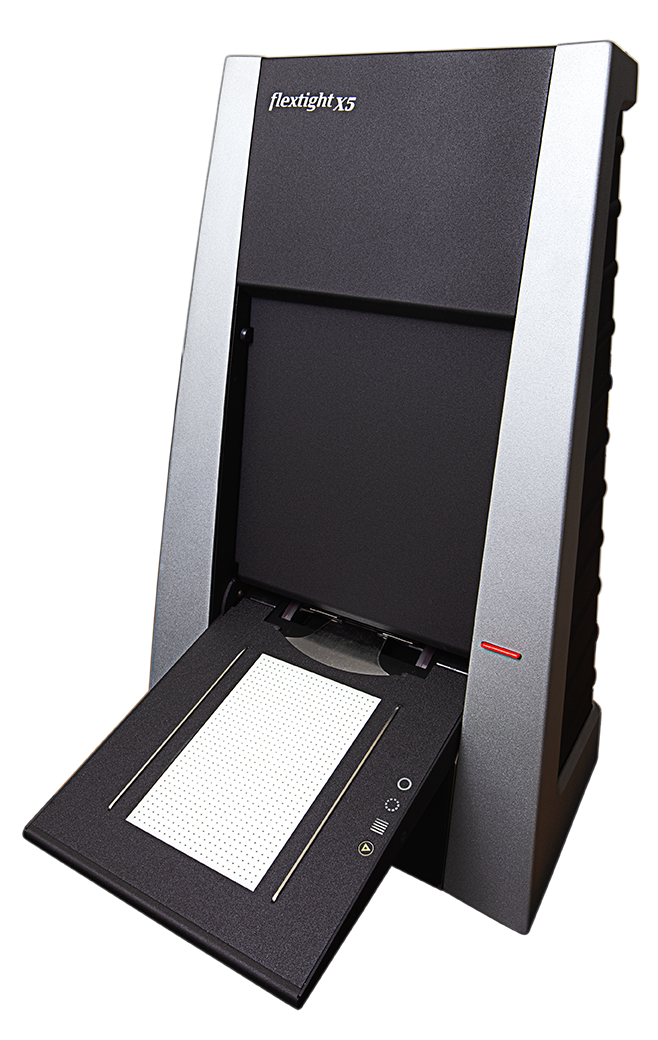
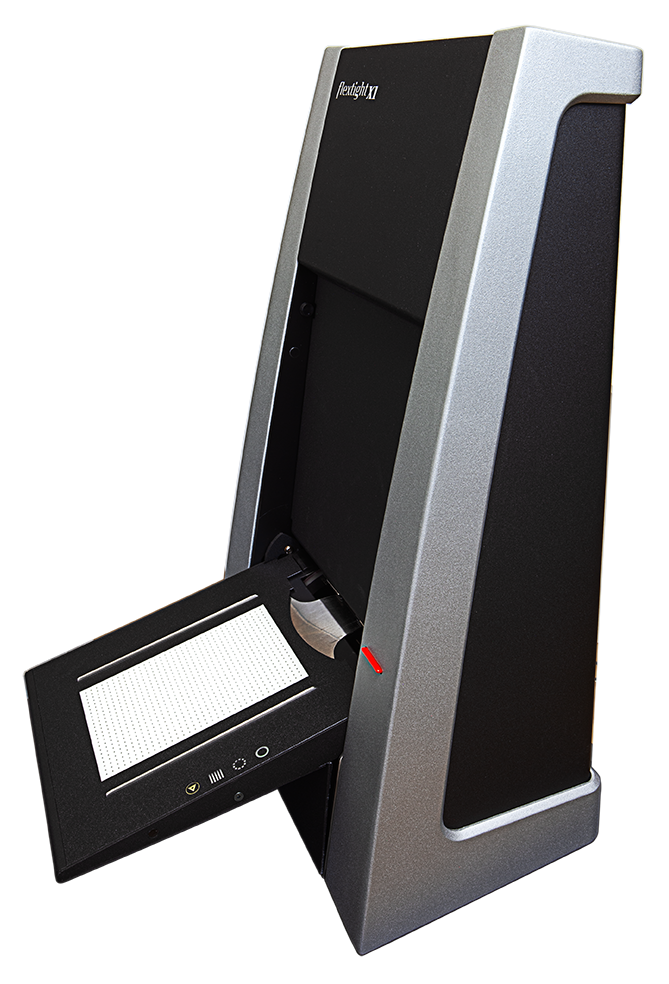
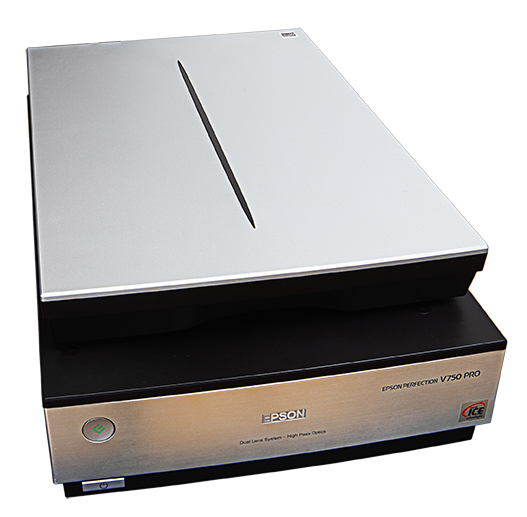
High-end equipment matters, but equipment alone does not guarantee a high-end result. Two providers may use respected scanners and still deliver very different outcomes because the difference lies in setup, calibration, operator judgement, maintenance and capture discipline.

When evaluating a scanning provider, it is worth paying attention not only to which scanners they list, but to how they describe their use. Useful signs include:

  • clear explanation of which scanner suits which material,
  • honest acknowledgement that different scanners have different strengths,
  • evidence that workflow decisions are based on condition and output needs,
  • and consistency in viewing, calibration and file preparation.

A trustworthy provider treats equipment as part of a system, not as a decorative list of famous model names.

This is particularly important when a studio offers more than one scanning path. In that case, the real question is not “Which scanner is the most expensive?” but “Which scanner is most appropriate for this original, in this condition, for this purpose?”
Handling and safety
How a provider handles the original is part of the quality
Clients often focus on file quality, but the first responsibility of a scanning provider is the safe handling of the original. If the material is rare, irreplaceable or physically unstable, poor handling can cause damage that no digital result can justify.

A good provider should show that handling is not an afterthought. It should be built into the service from intake onward.

Look for signs such as:

  • careful review before scanning,
  • clear attention to sleeve condition and contamination risk,
  • minimal unnecessary handling,
  • workflow choices adapted to curl, brittleness or damage,
  • and a realistic, cautious attitude toward fragile materials.

The language a provider uses can also be revealing. A serious lab usually speaks in terms of safe handling, assessment, suitability and preparation. A weaker one often speaks only in terms of speed, automation and volume.

For valuable originals, confidence should come from care, not from haste.
Color management
Consistency matters more than dramatic-looking samples
Many providers show attractive before-and-after examples, but these can be misleading if the underlying workflow is inconsistent. A better indicator of quality is whether the provider appears to work in a controlled and repeatable way.

This includes:

  • calibrated capture and viewing conditions,
  • a coherent color-managed workflow,
  • predictable file preparation,
  • and consistency between different scanners, displays and output stages.

This point becomes especially important when a client wants objective comparison between scanning methods. If different scanners are not aligned within the same controlled environment, comparison becomes less meaningful. The client may end up comparing workflow differences instead of scanner characteristics.

A strong provider understands that consistency is not a marketing extra. It is the foundation that makes technical comparison, accurate evaluation and reliable output possible.
Communication
A good provider should be able to explain the process in plain language
One of the simplest ways to judge a scanning service is to look at how clearly they communicate. If a provider cannot explain their process before the project begins, it is difficult to trust the decisions made during the work itself.

Useful communication usually includes:

  • asking relevant questions before quoting,
  • explaining why a particular workflow is recommended,
  • clarifying what is included and what is optional,
  • describing likely limitations of the original,
  • and confirming the intended use of the final file.

This does not mean every client needs a technical lecture. It means the provider should be able to translate technical decisions into practical reasoning.

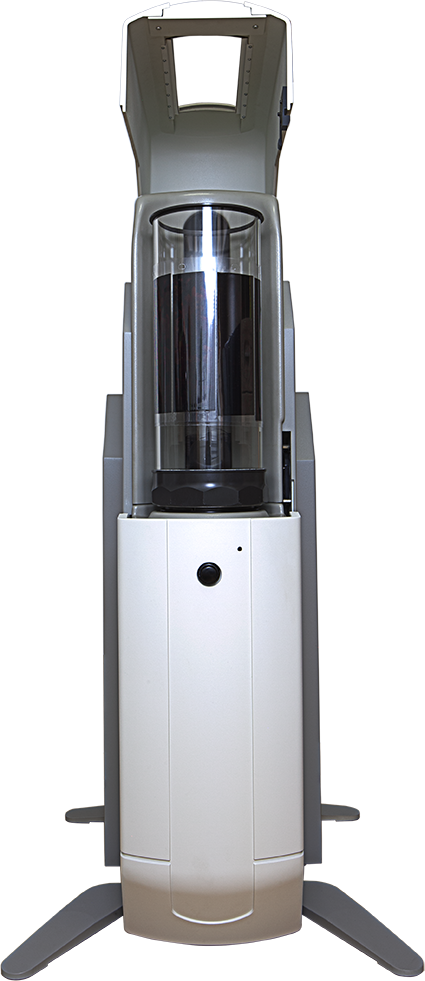
For example, they should be able to explain why one original should be drum scanned, why another may be better suited to a virtual drum workflow, or why a reflective original should follow a different path entirely. The goal is not to impress the client with jargon, but to reduce uncertainty and make the decision more transparent.
Deliverables
Choose a provider who talks about files, not only scans
A scan is not the final goal. The real goal is a file that is useful for what comes next.

That may mean a master archive file, a print-ready working file, a restoration base file, a publication image, a comparison set or a balanced production file for regular use. Different purposes require different priorities.

A good provider should clarify:

  • what file formats are delivered,
  • whether the file is intended as a master or a working derivative,
  • what degree of correction is included,
  • whether dust spotting or retouching is part of the service,
  • how files are named and organised,
  • and whether the output suits archive, print, editorial or web use.

When providers speak only about scanning and not about deliverables, an important part of the service is missing. Clients do not order machine time. They order usable results.
Price and value
Low price can hide high cost later
Price matters, but in scanning work it should be interpreted carefully. A lower quote may reflect a simpler workflow, less inspection, less careful handling, lower consistency or reduced time spent on assessment and quality control.

This does not mean the most expensive provider is automatically the best. It means the quote should be understood in relation to what is actually being offered.

Useful questions include:

  • What level of inspection is included?
  • Is scanner choice tailored or fixed?
  • Are files prepared consistently?
  • How much handling is involved?
  • What level of operator attention is part of the process?
  • What happens if the material turns out to be more fragile or complex than expected?

In high-end scanning, value often lies in avoiding preventable problems: rescanning, poor file suitability, inconsistent results, unnecessary retouching, or risk to the original. A service that costs less at the start may cost more once compromise and correction are taken into account.
Comparison mindset
If a provider claims to be the best, ask how they compare
The scanning industry often relies on broad statements such as “museum quality,” “archival quality,” “highest resolution” or “premium scan.” These phrases may be useful as general positioning, but they are not enough on their own.

A more convincing provider is one that helps clients understand differences rather than hiding behind slogans.

That may include explaining:

  • when a drum scan is justified,
  • when a virtual drum workflow is the better balance,
  • when a flatbed path is appropriate,
  • when a reflective original should be treated differently from film,
  • and when the condition of the material should outweigh theoretical technical advantage.

Providers who acknowledge trade-offs are usually more credible than providers who pretend every project has a single obvious solution.
Trust signals
Signs that a provider is likely to be reliable
In practice, clients often need a way to distinguish between attractive presentation and genuine competence. A few signals tend to be especially useful.

Look for providers who show:

  • clear specialisation rather than vague general claims,
  • evidence of working with different original types and conditions,
  • careful language around fragile or valuable material,
  • visible understanding of archive, print and restoration needs,
  • well-structured explanations of workflow,
  • and a willingness to recommend different solutions for different cases.

Trust also grows when a provider seems selective and realistic. It is often reassuring when a lab explains that not every original needs the same treatment, not every project needs the most expensive option and not every technical maximum produces the best practical result.
What to ask
Questions worth asking before you place an order
Before sending originals to a scanning provider, it is reasonable to ask a few direct questions. The answers often reveal more than the website itself.

Useful questions include:

  • How do you choose the scanner for a particular original?
  • How do you handle fragile, curled or damaged film?
  • What is included in the quoted service, and what is not?
  • How is your workflow calibrated and kept consistent?
  • What kind of file do you recommend for my intended use?
  • Can you explain the difference between your available scanning paths?
  • How should the material be packed, labelled and prepared before shipment?
  • Who reviews the originals before scanning begins?

A strong provider should welcome these questions. If the answers are vague, evasive or excessively promotional, that is usually a warning sign.
Practical review
What to check before choosing a scanning partner
Before committing to a provider, a short review can make the decision more objective.

Checklist:

  • Do they explain their workflow clearly?
  • Do they match the process to the original?
  • Do they show awareness of handling risk?
  • Do they discuss file purpose, not only scan resolution?
  • Do they appear consistent in color management and output?
  • Do they acknowledge trade-offs between different scanning paths?
  • Do they ask relevant questions before quoting?
  • Do they seem careful with fragile or valuable material?
  • Do they inspire confidence through clarity rather than exaggeration?
Quick guide
How to evaluate a scanning provider at a glance
Table:
Situation Main concern Recommended approach
You need the highest possible image quality Meaningful detail, tonal control and file usefulness Choose a provider that explains scanner choice and output purpose, not only resolution
Your originals are fragile or valuable Safe handling and minimal risk Prioritise careful assessment, conservative handling and a clearly defined workflow
You want objective scanner comparison Fair and consistent evaluation Look for a provider with calibrated equipment, controlled color management and more than one serious scanning path
You have mixed materials Wrong workflow for the wrong original Choose a studio that can match different originals to different capture methods
You are comparing quotes Hidden compromise behind a low price Compare what is included in handling, inspection, file preparation and quality control
Important note
Do not confuse technical vocabulary with real expertise
A provider may use impressive language and still offer a weak or unsuitable service. Terms such as archival, museum quality, ultra-high resolution or premium scan are not meaningful unless they are supported by a credible workflow.

Real expertise usually appears in more practical ways:

  • measured recommendations,
  • clear limitations,
  • respect for the original,
  • consistent process,
  • and confidence without exaggeration.

In scanning, the most persuasive provider is rarely the one making the loudest promise. It is the one making the clearest decisions.
Before you order
Common questions when choosing a scanning provider
Question:
Should I choose a provider by resolution alone?
Answer:
No. Resolution is only one part of the result. Handling quality, scanner suitability, tonal performance, color consistency and file preparation are often just as important.

Question:
Is the most expensive scanner always the best choice?
Answer:
Not necessarily. The best choice depends on the format, condition and purpose of the original. A more demanding scanner can be the right solution in one case and the wrong one in another.

Question:
What matters most for valuable originals?
Answer:
Safe handling, careful inspection, minimal unnecessary intervention and a workflow chosen specifically for the condition of the material.

Question:
Why is communication so important before scanning begins?
Answer:
Because the provider needs to understand both the original and the intended output. Clear communication helps prevent wrong assumptions, unnecessary risk and unsuitable file delivery.
How we work
Choosing a scanning partner should mean choosing a thinking workflow
At Scan Hub, we believe a scanning service should be built around the original, not around a fixed template. That is why we assess format, condition, handling risk and intended output before deciding how a project should proceed.

Our approach is based on the idea that serious scanning requires more than a single machine or a single promise. It requires the ability to compare workflows, select the most appropriate path and keep the entire process consistent from intake to delivery.

For clients, this means a service that is:

  • more transparent in its reasoning,
  • safer for valuable originals,
  • more consistent across different scanning paths,
  • and better aligned with the actual purpose of the final file.
Related equipment
Different film condition and output goals may require different scanning paths
Not every film original should be handled in the same way. The scanner and workflow should be matched to both the condition of the material and the intended output.
Related articles
Further reading on scan preparation and workflow decisions
Explore related guides on resolution, scanner choice and film condition to plan a safer and more effective scanning workflow before the original reaches the scanner.

Not sure how to choose the right scanning provider for your originals?

Tell us what you need to scan, what condition it is in and what the final files are for. We can help you evaluate the most suitable workflow before the project begins.


  • Original type and format
  • Number of items
  • Physical condition
  • Output goals
  • Any concerns about handling or consistency